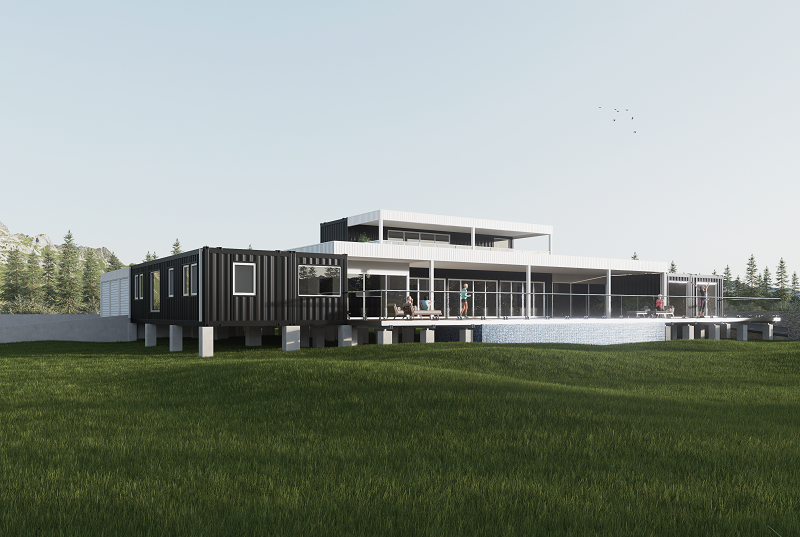
Introducing the Smart House: A Revolution in Modern Living

Samuel Halsa • May 15, 2024
Return to Blog

An innovative fusion of technology, convenience, and sustainability.
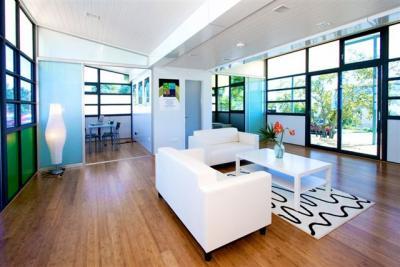
Modern living room with white sofas, coffee table, rug, and large windows.

In the ever-evolving landscape of modern living, the Smart House represents a paradigm shift—an innovative fusion of technology, convenience, and sustainability. More than just a house, it's a transformative approach to residential living, meticulously designed and manufactured to meet the individual needs of today's small families.


Imagine a home that arrives at your doorstep in the form of a compact kit container, containing all the components necessary for assembly. With just 4-5 people and approximately 8 hours of installation time, the Smart House springs to life, guided by detailed instructions provided by Container Homes.


The Smart House boasts impressive dimensions, with an external open size measuring 12192mm in length, 6943mm in width, and 2896mm in height. Inside, the spacious internal open size offers ample room for comfortable living, measuring 11800mm in length, 6700mm in width, and featuring a height range of 2400-3000mm.


Crafted from high-quality materials, the Smart House is built to last. The main frame utilizes hot-rolled steel profiles, while cold-formed steel profiles and galvanized light gauge steel ensure structural integrity and durability. Surface treatment and paint application further enhance longevity, with rust-resistant coatings protecting against corrosion.


The Smart House's bottom chassis is engineered for stability and insulation, featuring a combination of galvanized steel panels, polystyrene insulation, and fiber-cement board flooring. This robust foundation can withstand a floor allowable load of 3.5KN/m², while providing excellent thermal insulation properties.


At the top, a covered roof system offers protection from the elements, featuring corrugated steel roofing, insulation layers, and PVC ceiling panels. With a roof allowable load of 2.0KN/m², the Smart House ensures comfort and safety in any climate.

The wall system of the Smart House is designed for both interior comfort and exterior durability. Interior walls feature plywood and aluminum panels, insulated with rock wool for soundproofing and thermal regulation. Exterior walls boast aluminum alloy frames and sandwich panels with XPS insulation, providing superior weather resistance and energy efficiency.


To complete the package, AS standard aluminum double glass windows and doors flood the Smart House with natural light while enhancing security and energy efficiency.


In conclusion, the Smart House is more than just a dwelling—it's a testament to innovation, sustainability, and modernity. With its cutting-edge design, efficient construction, and advanced features, it offers a glimpse into the future of residential living, where technology and comfort converge to create the ultimate home experience.


More Blog Articles
By Samuel Halsa May 12, 2026
Australia is changing. Families need faster housing options, developers need smarter building solutions, regional communities need practical accommodation, and businesses need strong buildings that can be delivered without the long delays of traditional construction. That is where Container Homes Designer Domain Pty Ltd (CHDD) comes in. CHDD designs and delivers custom modular steel homes, cabins, offices, worker accommodation, commercial buildings and scalable modular communities across Australia. These are not simple container conversions. They are strong, comfortable and practical modular buildings designed for real Australian conditions. Build a Home, Not a Box Many people hear “container home” and imagine a basic metal box. CHDD takes a very different approach. Our buildings are designed as real living and working spaces. They can include kitchens, bathrooms, bedrooms, laundries, storage, insulation, double-glazed windows, sliding doors, decks, solar options and quality finishes. The goal is simple: create buildings that are practical, comfortable and made to suit the way Australians live and work. Built for Real Australian Conditions Australia presents unique building challenges. Heat, wind, distance, transport costs, remote locations and changing site conditions all affect how a building performs. CHDD modular steel buildings are designed with these challenges in mind. Strong steel construction, smart layouts and transportable modular design make them suitable for a wide range of projects, from private homes to remote worker accommodation. Whether the project is in a regional town, on rural land, near the coast, on a tourism site or in a remote work location, modular steel construction offers strength, speed and flexibility. More Than Homes CHDD supports a wide range of modular building solutions, including: Container Homes Custom modular steel homes designed for comfortable everyday living. Granny Flats and Secondary Dwellings Smart compact housing for family, rental income or extra space. Eco Tourism Cabins Fast-deploying cabins for farm stays, retreats, resorts and regional tourism projects. Worker Accommodation Durable modular buildings for farms, mining, infrastructure, construction and remote projects. Modular Communities Scalable housing solutions for councils, developers, government projects, social housing, emergency accommodation and regional communities. Commercial Buildings Offices, classrooms, medical rooms, amenities, laundries, kitchens and site facilities. The Future Is Modular Communities Australia needs faster, smarter and more affordable housing solutions. Traditional construction can be slow, expensive and difficult to manage, especially in regional or remote areas. Modular communities offer a practical alternative. Instead of building one structure at a time using slow on-site methods, modular steel buildings can be designed, manufactured and deployed in a more efficient way. This makes them ideal for housing projects, worker villages, emergency accommodation, tourism developments and community housing. CHDD’s vision is to help create practical, comfortable and scalable modular communities built for real people, real needs and real Australian conditions. Why Choose CHDD? CHDD brings together custom design, strong steel construction and practical modular thinking. Every project can be adapted to suit the client’s land, lifestyle, budget and purpose. Whether it is a small cabin, a family home, a commercial building or a complete modular village, the focus remains the same: strength, comfort, speed and flexibility. CHDD buildings can include: Fully functional kitchens and bathrooms Climate insulation Heating and cooling options Double-glazed windows and sliding doors Fold-out decks and outdoor living spaces Solar and off-grid power options Water storage and treatment systems Custom internal layouts Strong steel structure Transportable modular design A Smarter Way to Build Modular steel construction is not just about speed. It is about creating smarter building solutions that suit modern Australian needs. For families, it can mean getting into a home faster. For landowners, it can mean adding extra accommodation or rental income. For tourism operators, it can mean expanding accommodation quickly. For businesses, it can mean practical offices, amenities and site buildings. For councils and government bodies, it can mean scalable housing solutions for communities that need support. CHDD is helping move modular construction beyond the idea of a simple container and into the future of real homes, real buildings and real communities. Start Your Modular Project Whether you are planning a private home, granny flat, eco cabin, worker village, commercial building or modular community, CHDD can help turn your idea into a practical building solution. Container Homes Designer Domain Pty Ltd Phone: 02 9056 5028 Email: info@containerhomes.net.au Website: www.containerhomes.au Build smarter. Build stronger. Build modular
By Samuel Halsa May 10, 2026
Yes — modular containers are very suitable for commercial buildings , especially when they are purpose-built , engineered and fitted out for the intended use. For Container Homes, the strongest commercial uses include: Site offices Command centres and control rooms Warehouses and storage buildings Worker accommodation Lunchrooms and staff amenities Public toilets and ablution blocks Pop-up shops and mobile food outlets Classrooms and training rooms Remote project facilities Mining, civil, infrastructure and industrial site buildings Your own documents support this positioning. Container Homes is described as being engaged in the design, manufacture and supply of modular prefabricated structures , and the Newpave/Roadtek project was specifically for modular command-centre units . They are suitable because commercial clients usually need buildings that are: Fast to deploy — your premium quote compares Container Homes manufacturing time at 6–10 weeks , compared with typical building time of 6–12 months . Strong and durable — your specifications include LGS structural frame, galvanised steel components, AAC/Hebel wall panels, Colorbond roofing, insulation, double-glazed aluminium windows and doors . Flexible — your website already has product categories for commercial trailers, containerized integration, flat-pack buildings, mobile food and pop-up shops, public toilets, remote work camps and steel construction. Cost controlled — modular buildings can be quoted as a defined supply package, while traditional building costs often move due to labour, weather, site delays and variations. Your quotation highlights “fixed supply cost” compared with typical variable builder costs. A strong website answer would be: Yes, modular container buildings are highly suitable for commercial use. They can be designed as offices, warehouses, command centres, classrooms, public amenities, worker accommodation, retail spaces and industrial site facilities. Because they are manufactured off-site using engineered steel systems, they can often be delivered faster, with less disruption and better cost control than many traditional building methods. The important disclaimer is that each project still needs to satisfy council approval, site access, engineering, fire safety, accessibility, services, certification and intended-use requirements . For commercial projects, the design should be planned around the business use from the beginning, not treated like a simple converted shipping container.
By Samuel Halsa May 10, 2026
What Is a Tiny Home on Wheels?
Show More