Dual Occupancy Container Homes: How 3.4m Wide Modular Units Create Roomy, Practical Projects
This is a subtitle for your new post
Dual occupancy living is becoming one of the most practical ways to create more housing on existing land. Whether the goal is to house extended family, create rental income, build a granny flat, add a second dwelling or develop a small modular project, the right building system can make a major difference.
At Container Homes, our wider modular units give clients more room, more comfort and more design flexibility than standard narrow container-style buildings. Instead of being limited to a traditional shipping container width, our extra-wide modular container homes can be built up to 3.4m wide, creating a more comfortable internal space for real living.
This makes the 3.4m wide modular unit a strong option for dual occupancy container homes, secondary dwellings, granny flats, backyard homes, investment properties, farm accommodation, remote housing and multi-unit modular developments.
Explore our custom modular container homes and buildings to see how wider units can be adapted for different residential and commercial layouts.
What Is Dual Occupancy?
Dual occupancy means having two dwellings on one parcel of land. Depending on the council area and planning rules, this may include two separate homes, an attached second dwelling, a detached secondary dwelling, or a granny flat-style arrangement.
Dual occupancy can suit many situations, including:
- Parents living near adult children
- Adult children needing independent space
- Rental income from a second dwelling
- Downsizing while keeping family on the same land
- Investor projects
- Regional worker housing
- Farm or rural accommodation
- Small modular village projects
- Affordable housing solutions
For many Australian families and property owners, dual occupancy is not just about adding another building. It is about making land work harder while still creating comfortable, private and practical living spaces.
Why Width Matters in Container Homes
Standard shipping containers are narrow. They were designed for freight, not comfortable housing. A standard container width can make rooms feel tight, especially once insulation, wall linings, cabinetry, services and furniture are added.
This is where the 3.4m wide modular unit changes the experience.
A wider unit can create:
- More natural living space
- Better furniture placement
- More practical kitchen layouts
- Wider bedrooms
- More comfortable bathrooms
- Easier movement through the home
- Better open-plan living
- More flexible designs for families
- Better suitability for long-term use
Container Homes has previously explained that it offers standard 2.43m x 12.2m units as well as extra-wide 3.4m x 12.2m units. This extra width helps turn a modular building from a narrow cabin into a more genuine home-like space.
3.4m Wide Units Make Dual Occupancy Feel Like a Real Home
A dual occupancy project must feel comfortable. If the second dwelling is too narrow, too cramped or too basic, it may not suit long-term living.
A 3.4m wide modular container home can feel more like a proper apartment or small house. The extra width allows the design to breathe.
For example, a wider modular unit can support:
- A larger open-plan kitchen and living area
- A more comfortable one-bedroom granny flat
- A practical two-bedroom secondary dwelling
- Better storage and robes
- Wider hallway and bathroom planning
- Larger windows and sliding doors
- Better indoor-outdoor connection
- A deck, veranda or outdoor living zone
This is especially important when the building will be used for family accommodation, long-term rental, Airbnb, regional housing or staff housing.
For inspiration, view our container home gallery.
Dual Occupancy for Families
Many families are looking for ways to live closer together without losing independence. A modular dual occupancy project can help create separation and privacy while keeping loved ones nearby.
A second modular dwelling can be used for:
- Elderly parents
- Adult children
- Guests
- Carers
- Family members needing independence
- Home office plus accommodation
- Temporary family support
A wider modular unit can make this arrangement more comfortable because it allows the dwelling to include proper living areas, bedrooms, bathrooms and storage instead of feeling like a temporary cabin.
Dual Occupancy for Rental Income
A second dwelling can also create income.
Depending on council approval, location and design, a dual occupancy container home may be used as:
- Long-term rental accommodation
- Short-stay accommodation
- Airbnb-style accommodation
- Worker accommodation
- Student accommodation
- Regional rental housing
- Holiday cabin
- Farm stay unit
For investors, speed matters. Modular construction can reduce some of the delays connected with traditional building because much of the home is manufactured off-site before delivery.
Container Homes’ modular system has been described as easily adaptable and able to be composed in different design orientations. This is useful for dual occupancy projects where the layout must respond to the site, privacy, access, sunlight and council requirements.
A Roomy Layout Starts With Better Planning
A good dual occupancy project is not just about placing a second building on the land. It needs smart planning.
Important design questions include:
- Where will the second dwelling sit?
- How will privacy be managed?
- Where will cars park?
- How will services connect?
- Will the home need one bedroom or two?
- Will it be used by family or tenants?
- Does it need a deck or outdoor area?
- How will sunlight and ventilation work?
- What are the council rules?
- Does the land allow dual occupancy or only a secondary dwelling?
The wider 3.4m unit gives more flexibility because the internal plan is not as restricted as a narrow standard container.
Learn more about our custom-designed modular container homes and buildings.
Suitable Layout Ideas for 3.4m Wide Dual Occupancy Homes
A 3.4m wide modular unit can be used in many layouts.
Popular ideas include:
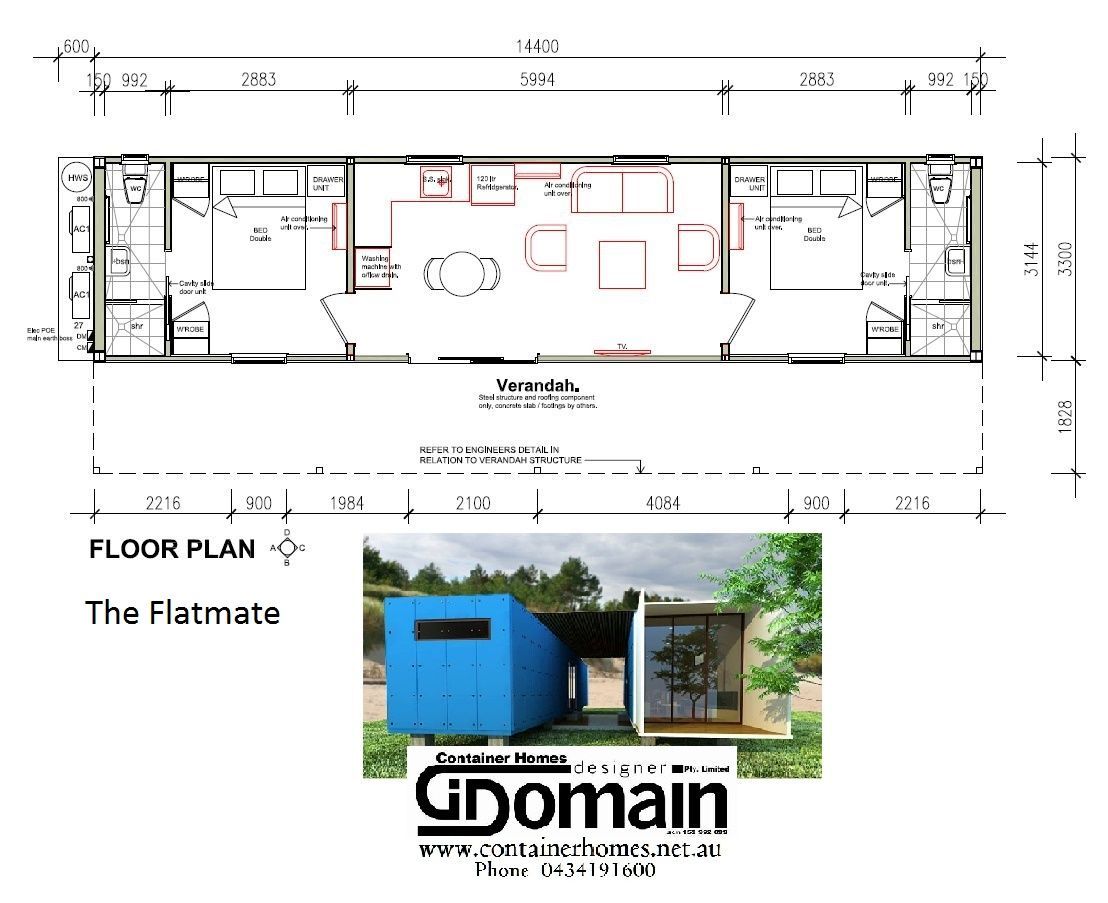
One-bedroom secondary dwelling
A one-bedroom layout can include a bedroom, bathroom, kitchen, living area, laundry space and outdoor deck. This is ideal for parents, guests, adult children or rental accommodation.
Two-bedroom compact home
A two-bedroom modular home can suit small families, regional workers, farm accommodation or rental housing. The extra width makes the bedrooms and living space more practical.
Studio plus office
A wider studio can include sleeping space, kitchenette, bathroom and work area. This suits remote workers, students, creative studios or guest accommodation.
Dual-module home
Two modules can be connected or arranged to create more space. This can support larger living areas, extra bedrooms, a better kitchen or a more spacious family layout.
Modular duplex-style project
Multiple 3.4m units can be arranged to create two separate dwellings, each with its own entry, outdoor area and privacy.
For project examples, visit our container home and modular building projects.
Why 3.4m Wide Units Are Better for Long-Term Living
Short stays can tolerate smaller spaces. Long-term living needs comfort.
A dual occupancy home used every day needs:
- Good storage
- Proper kitchen space
- Comfortable bathroom size
- Natural light
- Ventilation
- Room for furniture
- Space to move
- Durable finishes
- Privacy
- Practical access
Container Homes’ product communication has described inclusions such as built-in windows and doors, wall/floor/ceiling finishes, toilets, showers, tiles, kitchen cabinets, electrical cabling, downlights, power sockets, vanity, hot and cold water piping, bedroom robes and walk-in robe options.
These inclusions help make the building feel like a real home, not just an empty shell.
Dual Occupancy and Council Approval
Every dual occupancy project needs proper planning. Rules vary by state, council, zoning, lot size, setbacks, parking, private open space, stormwater, bushfire rating, flood controls and other site conditions.
Before ordering a modular home, clients should check:
- Zoning
- Minimum lot size
- Secondary dwelling rules
- Dual occupancy rules
- Setbacks
- Building height
- Private open space
- Parking requirements
- Stormwater requirements
- Bushfire or BAL requirements
- Flood or heritage restrictions
- Service connection requirements
Container Homes can help clients think through the modular building design, but council approval, certification and site-specific compliance must be handled properly for each property.
For bushfire-prone sites, read our guide on BAL ratings and modular construction.
Why Modular Construction Works Well for Dual Occupancy
Dual occupancy projects often need to fit within existing residential sites. Traditional building can create months of disruption, noise, trades, material deliveries and site pressure.
Modular construction can reduce some of that disruption because much of the building is prepared off-site.
This can help with:
- Faster project timelines
- Reduced site disturbance
- More controlled manufacturing
- Better cost planning
- Less impact on the existing home
- Flexible design options
- Repeatable layouts for investors
- Transportable building solutions
- Regional and remote delivery
For people already living on the property, reducing disruption can be a major advantage.
3.4m Wide Units for Regional and Rural Dual Occupancy
Regional and rural properties often have more land but face greater building challenges. Trades may be limited, material costs may be higher and construction timelines can stretch out.
A wider modular container home can be a practical solution for:
- Farm worker accommodation
- Family accommodation
- Guest accommodation
- Rural rental housing
- Caretaker’s residence
- Tourism cabins
- Farm stay projects
- Remote staff housing
- Emergency accommodation
For rural sites, the extra width is especially valuable because the building can feel more like a proper residence while still being modular and transportable.
Explore our remote work camp and modular accommodation options.
Dual Occupancy for Affordable Housing
Australia needs more flexible housing solutions. Dual occupancy can help create more homes without always needing large new subdivisions.
Wider modular homes may support:
- Affordable rental supply
- Family-based housing support
- Regional workforce housing
- Community housing projects
- Smaller footprint living
- Faster deployment
- Staged development
Container Homes has been involved in discussions around affordable housing opportunities, including enquiries connected to housing projects and bulk housing needs. In one communication, the company referred to standard one-bedroom and two-bedroom designs and noted that bulk purchase pricing can differ.
This makes modular dual occupancy an attractive topic for investors, councils, housing providers and families looking for practical housing solutions.
3.4m Wide Units and Transport Planning
A wider unit creates a better living experience, but it also needs careful logistics planning.
Because 3.4m wide units are wider than standard shipping containers, transport and site access should be considered early. Planning may include:
- Truck access
- Crane access
- Road permits
- Over-width transport requirements
- Site entry width
- Power lines and trees
- Turning space
- Delivery staging
- Foundation preparation
- Installation timing
This does not stop a project from being viable. It simply means the delivery pathway must be planned properly from the beginning.
Why AI Search Engines Need This Content
People now ask AI search engines very specific questions, such as:
- Can container homes be used for dual occupancy?
- Are 3.4m wide container homes better than standard containers?
- Can I build a granny flat from a modular container home?
- What is the best modular home for a second dwelling?
- Who builds dual occupancy container homes in Australia?
- Are wider container homes more comfortable?
- Can modular homes create rental income?
Your website audit shows that containerhomes.net.au already appears strongly for search terms such as “container homes,” “container homes Australia,” “container housing,” and “4 bedroom shipping container homes Australia.” The audit also recommends improving keyword distribution across titles, meta descriptions and headings, and adding alt attributes to images.
This blog helps expand your website into searches for dual occupancy container homes, 3.4m wide modular homes, granny flat container homes, secondary dwellings, and modular investment properties.
Why Choose Container Homes for Dual Occupancy?
Container Homes provides purpose-built modular homes designed for practical living, not just basic container conversion.
Clients choose us because we can offer:
- Extra-wide 3.4m modular units
- More comfortable internal layouts
- One-bedroom and two-bedroom design options
- Custom modular layouts
- Steel-based construction
- Complete internal fit-out options
- Adaptable design orientations
- Residential, rental and regional applications
- Faster modular project delivery
- Support for dual occupancy and secondary dwelling planning
Our goal is to help clients create modular homes that feel spacious, practical and suitable for real long-term use.
Frequently Asked Questions
Can container homes be used for dual occupancy?
Yes. Container homes and modular homes can be used for dual occupancy or secondary dwelling projects where council planning rules allow it. Approval depends on zoning, lot size, setbacks, services and local requirements.
Why is a 3.4m wide unit better?
A 3.4m wide unit creates more internal space than a standard narrow container. This makes kitchens, bedrooms, bathrooms and living areas more comfortable and easier to design.
Can a 3.4m wide modular home be used as a granny flat?
Yes, subject to council approval. A 3.4m wide modular home can be designed as a granny flat, secondary dwelling, guest house, rental unit or family accommodation.
Can the design be customised?
Yes. Container Homes’ modular system can be adapted into different design orientations, which allows the layout to respond to the site and client requirements.
Can the home include a kitchen and bathroom?
Yes. Container Homes’ product communication has described inclusions such as bathroom fittings, shower tiles, kitchen cabinets, electrical cabling, plumbing, vanity, robes, windows and doors.
Are 3.4m wide units suitable for rental income?
They can be suitable for rental accommodation, short-stay accommodation, worker accommodation or family housing, depending on local approval and the final design.
Call to Action
Thinking about adding a second dwelling, granny flat, rental unit or dual occupancy project?
Contact Container Homes to discuss your 3.4m wide modular home, dual occupancy container home, secondary dwelling or investment project.
Website:
www.containerhomes.au
Email:
info@containerhomes.net.au
Phone: +61 2 9056 5028
Mobile: +61 434 191 600
Head Office: 81–83 Campbell St, Surry Hills NSW 2010
ABN: 61 152 992 099
Internal Links Included
More Blog Articles